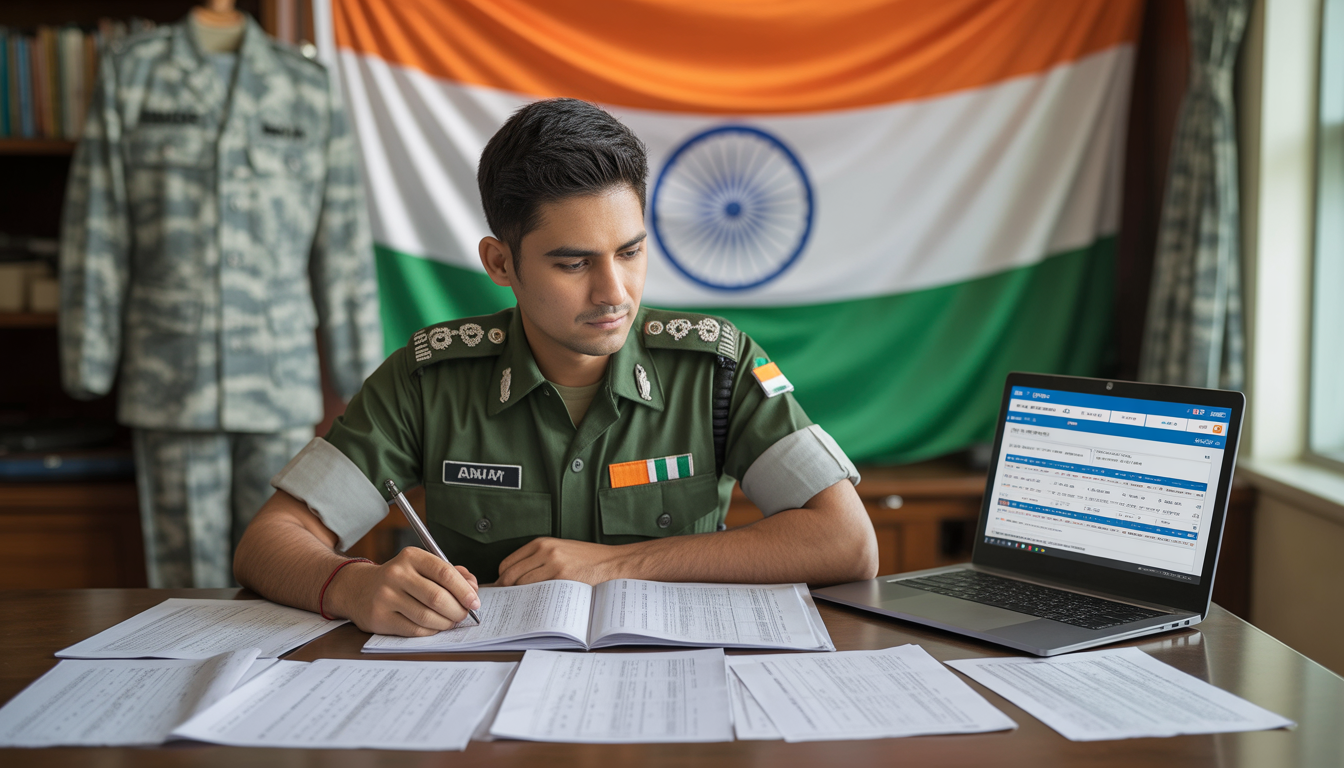
The Indian Army Agniveer Recruitment 2026 presents a golden opportunity for young aspirants who wish to serve the nation under the Agnipath Scheme. With more than 25,000 vacancies announced, competition is expected to be intense. To succeed in such a competitive environment, candidates must adopt a strategic and smart preparation approach. One of the most effective tools for success is solving Indian Army Agniveer Previous Year Question Papers.
Previous year question papers (PYQs) provide real exam exposure and help candidates understand the pattern, difficulty level, and frequently asked topics. Instead of preparing blindly, candidates can align their preparation according to actual exam trends. In this detailed guide, we will explore the importance of PYQs, subject-wise coverage, preparation strategy, and expert tips for maximizing performance.
Overview of Indian Army Agniveer Recruitment 2026
The Indian Army conducts recruitment for various Agniveer posts such as General Duty (GD), Technical, Clerk/Store Keeper Technical, Tradesman, Driver, Infantry, and Rifleman. The selection process consists of multiple stages including:
- Online Written Examination (Common Entrance Exam)
- Physical Fitness Test (PFT)
- Physical Measurement Test (PMT)
- Medical Examination
The written examination is the first and most crucial stage. Candidates who clear the written test proceed to the physical and medical rounds. Therefore, strong performance in the written exam significantly increases overall selection chances.
Why Indian Army Agniveer Previous Year Question Papers Are Important
Practicing previous year papers is not just an optional activity but a necessary part of serious preparation. PYQs offer several advantages that directly impact performance.
First, they help candidates understand the exact exam pattern. By solving multiple papers, aspirants get clarity on the number of questions, section-wise distribution, time duration, and marking scheme. This reduces uncertainty and builds familiarity with the structure.
Second, previous year papers highlight frequently asked topics. Many questions in competitive exams follow a trend. Certain chapters in Mathematics or repeated areas in General Knowledge often appear year after year. Identifying these patterns allows candidates to focus on high-weightage areas.
Third, solving PYQs improves time management. Since the exam is conducted in online mode, speed and accuracy are crucial. Practicing under timed conditions trains the brain to respond quickly and accurately.
Lastly, previous year papers help in self-assessment. After solving each paper, candidates can analyze their performance, identify weak subjects, and revise accordingly.
Subjects Covered in Indian Army Agniveer Previous Year Papers
The Indian Army Agniveer written exam generally includes the following subjects:
- General Knowledge
- General Science
- Mathematics
- Logical Reasoning
- English (for specific posts)
Understanding subject-wise trends through PYQs enhances preparation quality.
General Knowledge Section Analysis
The General Knowledge section tests awareness of national and international events, Indian history, geography, polity, sports, and defense updates. Questions may include static GK as well as current affairs.
Previous year papers help candidates determine whether the focus is more on historical facts, current news, or defense-related information. Regular reading of newspapers and monthly current affairs magazines is highly beneficial for scoring well in this section.
General Science Preparation Strategy
General Science questions are usually based on Class 8 to 10 level concepts from Physics, Chemistry, and Biology. Most questions are conceptual rather than highly technical.
By analyzing PYQs, candidates can identify important chapters such as human body systems, laws of motion, chemical reactions, and basic scientific phenomena. Revising NCERT textbooks and practicing concept-based questions is an effective strategy.
Mathematics Section Insights
Mathematics is considered a scoring subject in the Agniveer exam. Questions are commonly asked from topics such as percentage, profit and loss, ratio and proportion, time and work, speed and distance, simplification, and basic algebra.
Solving previous year question papers allows candidates to identify recurring numerical patterns and frequently used formulas. Regular practice improves calculation speed and minimizes errors. Maintaining a formula notebook for revision can significantly enhance performance.
Logical Reasoning and English Preparation
Logical reasoning questions test analytical ability and mental agility. Topics may include series, coding-decoding, analogy, blood relations, and direction sense. PYQs help candidates understand the level of reasoning difficulty and typical question framing.
For posts requiring English, candidates should focus on grammar rules, vocabulary, synonyms, antonyms, and sentence correction. Reviewing previous year English questions provides clarity regarding expected language proficiency.
How to Effectively Use Indian Army Agniveer PYQs
Simply downloading question papers is not enough. A structured approach is essential for maximum benefit.
Candidates should first complete their basic syllabus and strengthen conceptual understanding. After that, they should attempt one previous year paper at a time under exam-like conditions. Setting a timer and avoiding distractions creates a realistic testing environment.
After solving each paper, detailed analysis is crucial. Candidates must review incorrect answers, understand mistakes, and revise weak topics immediately. Keeping an error notebook helps in tracking progress and avoiding repetition of mistakes.
Practicing PYQs on a computer or tablet is recommended since the actual exam is conducted online. This ensures familiarity with digital exam settings.
Benefits of Solving Multiple Previous Year Papers
Candidates who solve at least five to ten previous year papers experience noticeable improvement in confidence and performance. They become comfortable with question patterns and develop a clear strategy for attempting sections.
Repeated exposure reduces exam anxiety and builds mental stamina. Time allocation becomes more efficient, and decision-making improves during the actual exam.
Availability of Indian Army Agniveer Previous Year Papers in Hindi
Many candidates prefer Hindi medium for preparation. Indian Army Agniveer Previous Year Question Papers are generally available in Hindi, English, or bilingual format. This allows aspirants to prepare in their preferred language without difficulty.
Expert Tips for Cracking the Indian Army Agniveer Exam
Consistent preparation is key to success. Candidates should create a daily study schedule that includes revision, practice, and mock tests. Staying updated with current affairs and defense news is important for the GK section.
Physical preparation must continue alongside written preparation. Since the selection process includes physical fitness tests, maintaining stamina and endurance is essential.
Weekly revision of important formulas, GK facts, and science concepts ensures long-term retention. Attempting full-length mock tests further strengthens preparation.
Conclusion
Indian Army Agniveer Previous Year Question Papers are one of the most reliable and effective resources for exam preparation. They provide clarity on exam pattern, highlight important topics, improve speed and accuracy, and build confidence.
With over 25,000 vacancies announced under the Agnipath Scheme, competition will be strong. Candidates who combine syllabus coverage, consistent PYQ practice, mock testing, and disciplined revision stand a higher chance of success.
Start practicing today, analyze your performance honestly, and stay committed to your goal. With focused effort and strategic preparation, achieving success in the Indian Army Agniveer 2026 examination is absolutely achievable.